Runway lightingfor all-weather operations
Runway lighting planning, procurement, and commissioning support for airfields that need dependable night, low-visibility, emergency, and regional connectivity operations.
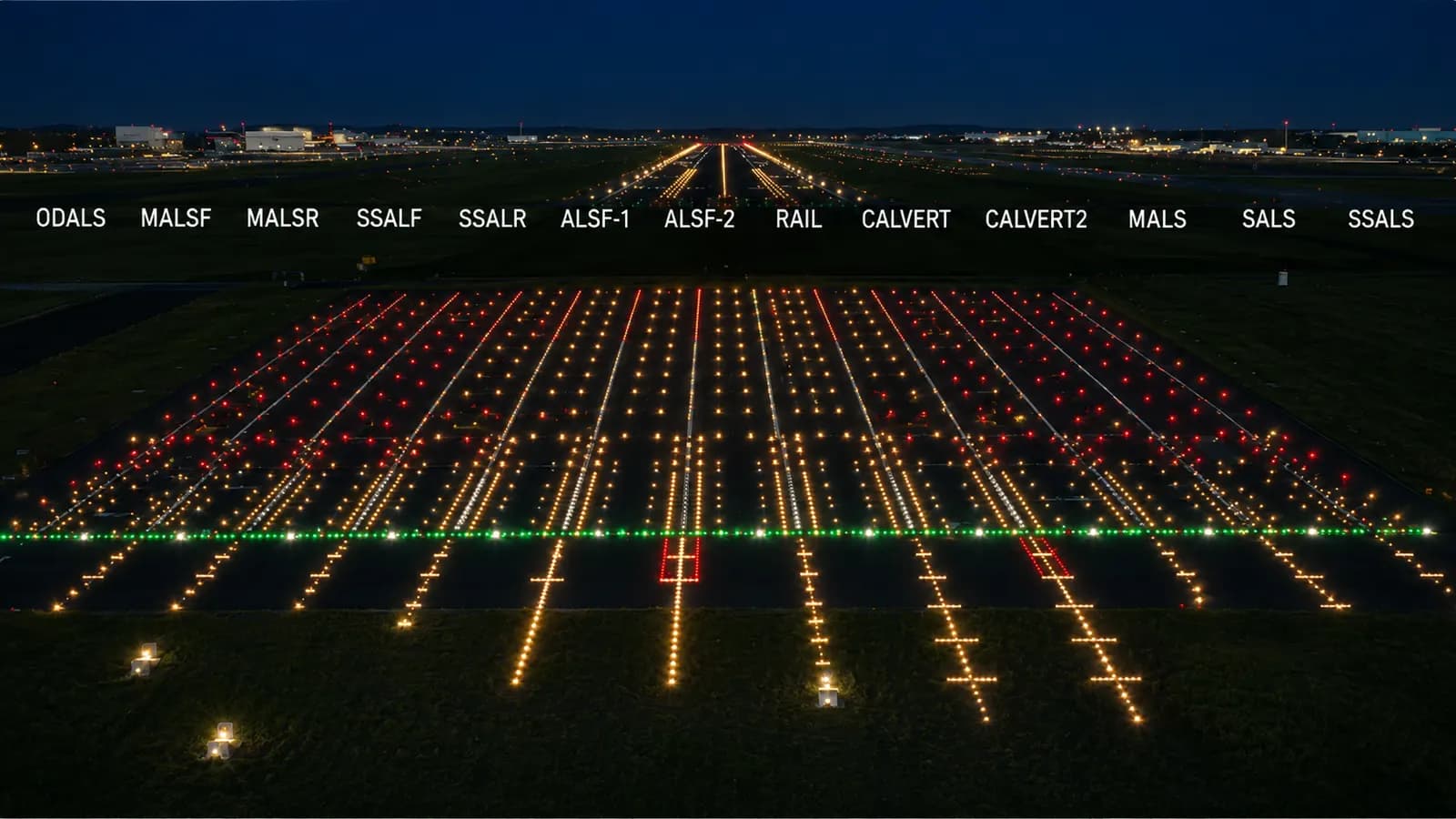
Runway lighting must work in the weather, at night, and under operational pressure.

Low-visibility runway confidence
Lighting plans account for runway identification, approach alignment, wet-surface visibility, and the real weather conditions that limit regional operations.

Field installation discipline
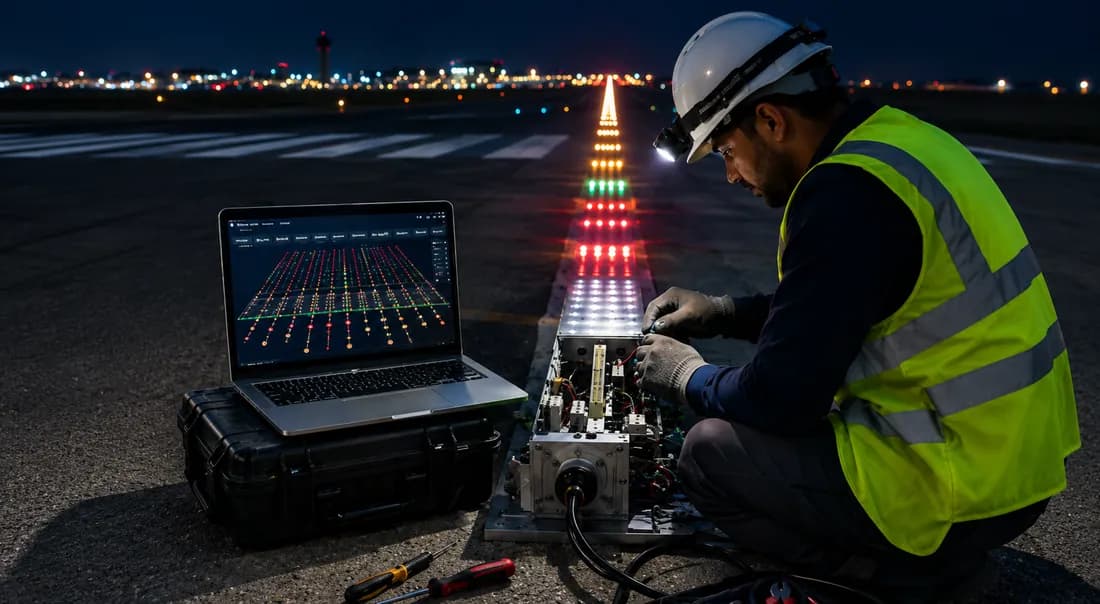
Installation support covers fixture placement, circuit continuity, safety access, tooling, documentation, and practical handover to local airport teams.

Pilot-centered approach design
Lighting decisions are evaluated from the cockpit perspective, with emphasis on approach recognition, runway transition, and stabilized landing confidence.
Visibility, power, and maintenance define the lighting system.
Runway lighting is not just an equipment purchase. It determines approach confidence, runway identification, low-visibility usability, emergency readiness, maintenance burden, power resilience, and whether a regional or remote airfield can operate safely beyond daylight constraints.
Aeronexus supports runway lighting programs from field assessment and specification through procurement, installation coordination, commissioning, monitoring, and operating procedures so the lighting system fits the real runway environment.
Built for aviation decisions
Approach and runway lighting definition
Define runway edge, threshold, centerline, approach, taxiway, obstruction, and emergency lighting needs based on aircraft category and operating envelope.
Power and resilience planning
Evaluate grid, solar, battery, UPS, and hybrid power strategies for airfields where continuity, redundancy, and maintenance access are operational constraints.
Installation and commissioning controls
Support vendor alignment, installation planning, alignment checks, photometric testing, documentation, training, and operational acceptance checkpoints.
Monitoring and advisory integration
Align lighting state, runway status, fault reporting, and field monitoring with MicroTower, airport operations, and night-use procedures.
From requirement definition
to operational readiness
Site and operation review
Assess runway geometry, approach constraints, weather profile, aircraft mix, power availability, maintenance access, and night-operation goals.
System specification and sourcing
Define lighting category, fixture type, control method, power architecture, monitoring requirements, spares plan, and procurement documentation.
Commissioning and readiness
Support installation review, circuit testing, night checks, operator training, maintenance planning, and acceptance documentation.
Where this capability applies
Regional airport night operations
Low-visibility approach readiness
Remote airstrips with resilient power
Runway modernization and monitoring